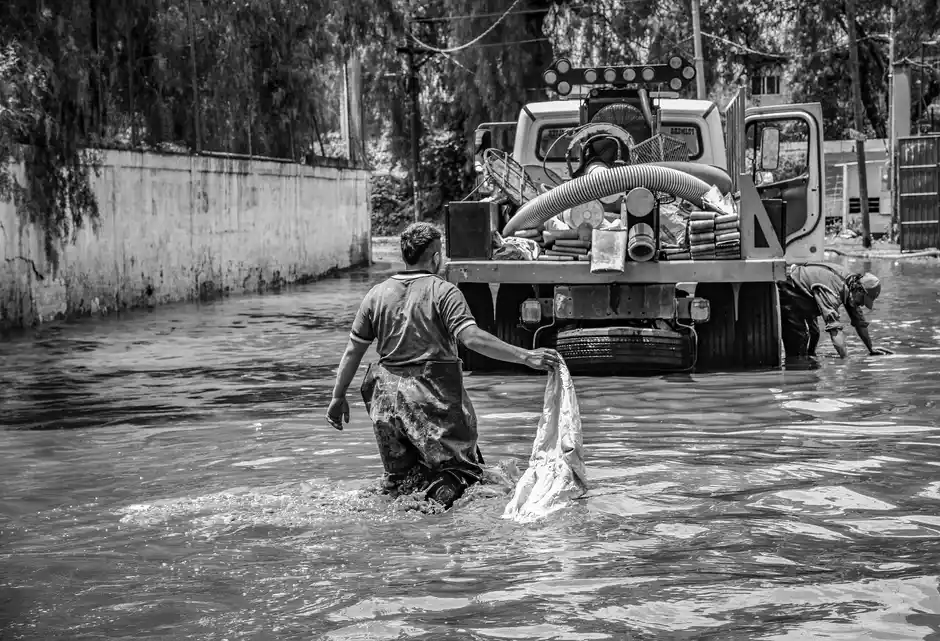
Truck-mounted extraction, thermal imaging, and same-day drying for Ventura County homes

Basement flood cleanup Port Hueneme CA - dry by morning

When your basement takes on water, every hour soaks deeper into the slab and framing. Our team delivers basement flood cleanup Port Hueneme CA homeowners call at 2 a.m. - extraction, moisture mapping, and drying set up the same visit. We cover flooded basement cleanup Port Hueneme California for slab-on-grade homes, beach cottages, and Naval Base Ventura County housing. Call (833) 321-7153.

↗
Fast online booking

Request service today

Tell us what is happening. Our local team will confirm your visit shortly.

No spam. No obligation. Just practical help.
Thanks — we'll call shortly to confirm your visit.
Professional basement flood cleanup in Port Hueneme
Careful work. Honest options.
About this service

What basement flood cleanup Port Hueneme CA involves

basement flood cleanup Port Hueneme CA is a water damage restoration service that removes standing water, dries structural materials, and stops secondary damage after a leak, overflow, or seepage event. It is needed the moment water pools on a basement floor - whether from a burst pipe, toilet overflow, slab leak, or foundation seepage. We start with a moisture meter and thermal imaging camera to map how far the water traveled, then extract, dry, and verify.

Port Hueneme sits at sea level, so groundwater and storm surge push hard against foundations in the Silver Strand and Surfside areas. Add 1960s slab-on-grade construction and salt air that eats pipe fittings, and you get the two calls we run most: a failed supply line behind the laundry wall and a sewage backup after heavy winter rain. If you search for basement flood cleanup near me in Port Hueneme CA during a storm, we are already rolling trucks.

  • ✓ Mold stopped early
  • ✓ Structure saved
  • ✓ Air quality protected
  • ✓ Insurance documented
What's included

What our basement flood cleanup includes

Every basement flood cleanup Port Hueneme CA job starts with a full inspection and ends with documented dry standard. Here is what is covered on a standard call, and what we scope separately if your basement needs reconstruction after the water is gone.

✓

Moisture mapping and inspection

We run a moisture meter, thermal imaging camera, and hygrometer across the floor, baseboards, and wall cavities to map exactly how far the water traveled. This 20 to 30 minute inspection drives every drying decision that follows.

✓

Standing water extraction

Truck-mounted extraction units pull the bulk of the water, with a floor drying mat for shallow pockets and a RIDGID wet vac for corners and the sump area. Most basements under 800 square feet are free of standing water in two to four hours.

✓

Antimicrobial treatment

We apply antimicrobial spray to all affected surfaces after extraction. On sewage backups and storm-driven floods, this step is not optional - it stops bacteria and mold from colonizing the wet drywall, insulation, and wood subfloor.

✓

Drying equipment setup

Dri-Eaz and Phoenix Restoration Equipment air movers and dehumidifiers go down based on the moisture map. We position them for airflow across wet surfaces, not just into the room, and set dehumidifier filters and air scrubber filters fresh on every job.

✓

Daily monitoring and documentation

We return every day to log moisture readings, check equipment, and adjust positioning until materials hit dry standard. You get the drying log and photo documentation at the end for your insurance file.

✓

Final verification and HEPA vacuum

Before we pull gear, we re-scan every surface and compare readings against an unaffected control area. Once dry, we HEPA vacuum the space and remove containment so your basement is ready to use again.

How it works

Our basement flood cleanup process

01

Emergency call

You call (833) 321-7153 and describe what happened - burst pipe, sewage backup, or water seeping through the slab. We ask about the water source, whether it is still running, and whether the power to the basement is safe. A crew is dispatched with extraction and drying gear loaded.

02

Inspection and mapping

On arrival we walk the basement with you, then run a moisture meter and thermal imaging camera across the floor, baseboards, and wall cavities. A hygrometer reads ambient humidity. This takes 20 to 30 minutes and tells us exactly how far the water spread before we start removing anything.

03

Water extraction

We pull standing water with a truck-mounted extraction unit and a floor drying mat for shallow pockets. A RIDGID wet vac handles the corners and sump area. Most basements under 800 square feet are free of standing water within two to four hours.

04

Drying and monitoring

We position Dri-Eaz and Phoenix Restoration Equipment air movers and dehumidifiers based on the moisture map, not guesswork. Expect 3 to 5 days of drying for a typical Port Hueneme basement. We return daily to log readings and adjust equipment until materials hit dry standard.

05

Final verification

Before we pull equipment, we re-scan every affected surface with the moisture meter and thermal camera. When readings match an unaffected control area, we remove the gear, HEPA vacuum the space, and hand you the drying log and photo documentation for your insurance file.

Tools & methods

Tools and methods we use

Purpose-built equipment, used by trained technicians — so the job is done accurately the first time.

Thermal imaging camera

Finds water hidden behind walls and under flooring by reading temperature differences. It tells us where the water actually went, not just where the floor looks wet.

Moisture meter and hygrometer

Calibrated meters read moisture content in drywall, wood subfloor, and concrete. The hygrometer tracks ambient humidity so we know when the space has actually dried.

Truck-mounted extraction unit

Pulls hundreds of gallons of standing water fast. It is the first piece of equipment on the job and the reason most basements are water-free within hours.

Dri-Eaz and Phoenix air movers

High-velocity air movers evaporate moisture from wet surfaces. We position them based on the moisture map, not in a circle around the room.

Dehumidifiers and air scrubbers

Dehumidifiers pull evaporated moisture out of the air, while air scrubbers with HEPA and air scrubber filters trap mold spores and fine debris.

Borescope camera

A thin camera that goes inside wall cavities so we can see whether insulation and framing got wet without tearing out the whole wall.

Floor drying mat

Sits flat over concrete and wood subfloor to pull shallow water and speed evaporation from the slab surface.

Real results

Before and after.

Silver Strand supply line flood

Before

A corroded supply line behind the laundry wall let go overnight. The 700-square-foot basement had two inches of standing water across the slab, with wet baseboards and a saturated bottom plate inside the wall cavity.

After

We extracted in three hours, made a strategic wall cut, and dried the cavity with directed airflow. Moisture readings hit dry standard in four days. The homeowner replaced one 2-foot drywall strip instead of the whole wall.

J Street District sewage backup

Before

Winter rain backed sewage into a 1950s raised-foundation basement. Contaminated water covered 400 square feet and soaked the lower drywall and insulation. The smell was strong enough that the family stayed elsewhere for two nights.

After

We removed the affected drywall and insulation, extracted, applied antimicrobial spray, and ran a negative air machine with HEPA filtration for three days. The space tested clean and hit dry standard in six days.

Hueneme Bay slab seepage

Before

Slow groundwater seepage kept a 900-square-foot slab-on-grade basement damp for weeks. No standing water, but baseboards were soft, the space smelled musty, and a moisture meter read elevated across the whole floor.

After

We dried the slab with floor drying mats and dehumidifiers, treated the surface with antimicrobial spray, and sealed the foundation cracks with epoxy injection resin. Readings matched the control area in five days.

Problems we solve

Basement flooding problems we solve in Port Hueneme

Most basement floods we see in Port Hueneme trace back to one of five sources. Each one behaves differently, and each needs a different cleanup approach. Here is what we run into and how we handle it.

Ask a pro →
01

Sewage backup during winter storms

We treat sewage backups as contaminated water: extract, remove affected materials, apply antimicrobial spray, and run a negative air machine with HEPA filtration until the space tests clean. Then we dry the structure and document everything for your claim.

↗
02

Slab leak pushing water up through the floor

We locate the leak with thermal imaging, isolate the affected slab area, extract, and dry with floor drying mats and dehumidifiers. We seal foundation cracks with epoxy injection resin and sealant so the same path does not leak again.

↗
03

Burst pipe behind a finished wall

A borescope camera lets us see inside the cavity without tearing out the whole wall. We make a strategic cut, extract, dry the cavity with directed airflow, and repair only what actually got wet.

↗
04

Foundation seepage from the high water table

We measure the seepage rate, dry the affected slab and walls, and treat the surface with antimicrobial spray. For recurring seepage, we recommend drainage and sealant work so the basement stays dry between storms.

↗
Proof you can check

Licensed, certified, and documented

✓
IICRC WRT (Water Damage Restoration Technician)IICRC
✓
IICRC ASD (Applied Structural Drying)IICRC
✓
IICRC AMRT (Applied Microbial Remediation Technician)IICRC
✓
EPA Lead-Safe Certified FirmU.S. Environmental Protection Agency
✓
California CSLB Licensed ContractorCalifornia Contractors State License Board
Good questions

Frequently Asked Questions

(833) 321-7153 →

Most residential basement flood cleanup jobs in Port Hueneme run $1,200 to $3,800 in 2026, depending on square footage, water category, and how much drywall or flooring has to come out. Clean-water jobs under 500 square feet often land near the low end; sewage backups with cut drywall push toward the high end. We give you a written scope before work starts.

Extraction usually takes two to four hours for a typical Port Hueneme basement. Drying is the longer phase - expect three to five days with air movers and dehumidifiers running, and up to seven days if the basement has a wood subfloor or saturated insulation. We log moisture readings daily and pull equipment only when materials hit dry standard.

The four calls we run most are burst supply lines, toilet overflows, foundation seepage from the high water table, and sewage backups during heavy winter rain. Salt air corrodes pipe fittings in older homes, and slab-on-grade construction near Port Hueneme Beach gives groundwater an easy path in. Roof leaks and HVAC condensate leaks also send water down into basements.

Yes, when drying starts within 24 to 48 hours. We extract standing water, apply antimicrobial spray, and run dehumidifiers and air scrubbers until basement humidity drops below 50 percent - the threshold where mold stops colonizing. If mold already took hold, we move into mold remediation after water damage rather than just drying over it.

Ready when you are

Call now for basement flood cleanup Port Hueneme CA

Standing water gets worse every hour - mold starts in 24 to 48. Call (833) 321-7153 and we will dispatch a certified crew with extraction and drying gear. Same-day start, insurance-ready documentation, and a written scope before work begins.

Call for service (833) 321-7153 →
Request an appointment

Contact our Port Hueneme crew

Call (833) 321-7153 any time, day or night. A live dispatcher answers and gives you an arrival window. For non-emergencies, email us and we will respond the same business day. We serve Port Hueneme, Ventura County, and the surrounding beach communities.

Request received — our team will be in touch shortly.
Tap to call(833) 321-7153