How to prevent frozen pipes in Port Hueneme Beach rentals
Port Hueneme Beach rentals freeze on the coldest December and January nights. Here is how landlords and tenants keep pipes from bursting.
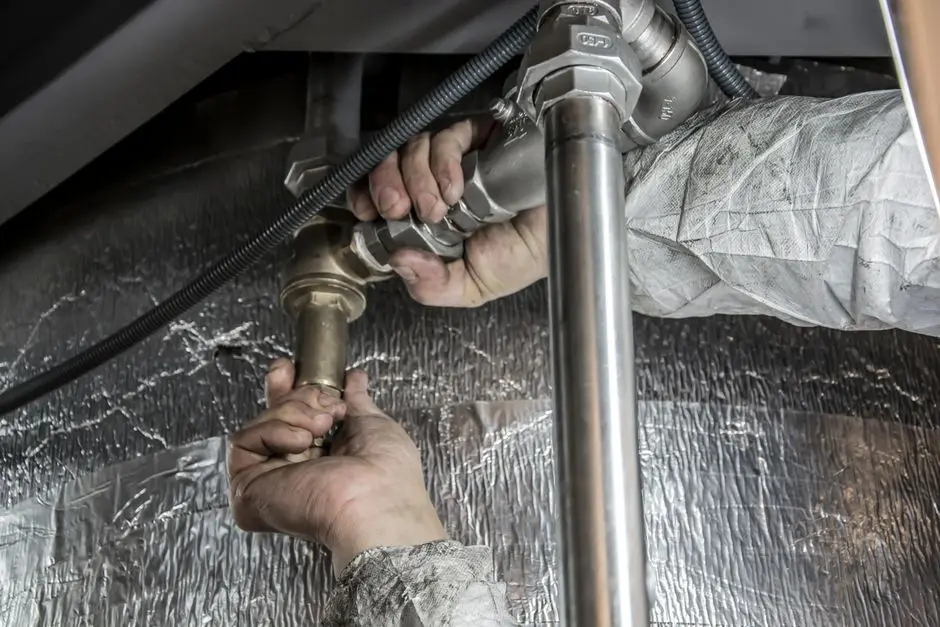
You prevent frozen pipes in a Port Hueneme Beach rental by keeping the unit at 60°F or higher, dripping the faucets that sit on exterior walls, and insulating the exposed copper and PEX lines under the building. The beachside rentals here freeze more often than the rest of Ventura County because the 1940s through 1960s buildings along the sand sit on open pier-and-beam foundations, and the salt air has already eaten the factory insulation off most of those pipes.
Below is the routine we walk landlords and tenants through every November, the temperatures and drip rates that actually work, and what to do when a line freezes anyway.
Why Port Hueneme Beach rentals freeze when the rest of the county doesn't
Port Hueneme Beach rentals freeze because the housing stock sits low, close to the water, and mostly on raised foundations with unheated crawl spaces. That combination is rare in Oxnard and Camarillo, where most homes are on slab.
Three things drive it:
- Open crawl spaces. The pier-and-beam construction common between Surfside Drive and the Silver Strand lets cold night air move freely under the floor. A pipe running through that space sees outdoor temperature, not indoor.
- Salt air. The marine layer corrodes pipe insulation and foam sleeves. A line that was wrapped in 1998 is often bare metal by 2026.
- Vacation turnover. A long-term tenant keeps the heat on. A short-term rental that empties out for a week in January does not.
Port Hueneme hits 32°F or below on a handful of nights most winters, usually between mid-December and late January. That is not a Minnesota winter, but it is enough to split a dry, uninsulated copper line in a single night.
What temperature should you keep a Port Hueneme Beach rental at?
Keep a Port Hueneme Beach rental at 60°F minimum, day and night, whenever the overnight forecast drops below 40°F. That is the number we give every landlord we work with, and it is the number that keeps the pipes inside the wall cavity above freezing.
If you own a short-term rental that sits empty between guests, set the thermostat to 62°F and leave it there for the whole winter. The extra two degrees cost roughly $18 to $25 a month on a 900-square-foot unit, which is far cheaper than one burst line.
Two adjustments matter more than the exact number:
- Do not use a schedule that drops below 60°F overnight. A 55°F setback sounds harmless. It is not, when the pipe is already running through a 38°F crawl space.
- Open the cabinet doors under every sink on an exterior wall. Kitchen and bathroom cabinets trap cold air against the pipe. Leaving them open lets the room's heat reach the plumbing.
If you manage several units across the beach, this is the single highest-value habit to build. We see the same pattern every January in Water Damage Restoration in Port Hueneme Beach calls: one unit with the heat off, one split line, one very expensive weekend.
Should you drip faucets to prevent frozen pipes in Port Hueneme Beach CA?
Yes. Dripping the faucets on exterior walls is the cheapest frozen pipe prevention Port Hueneme Beach property owners have, and it works because moving water freezes far more slowly than still water.
Here is the drip rate that actually does something:
- One drip every 1 to 2 seconds from the faucet farthest from where the water enters the building.
- A pencil-thin stream - about the width of a pencil lead - on any fixture that has frozen before.
- Both hot and cold sides. The hot line freezes first in a lot of these buildings because it cools in the wall between uses.
Start the drip when the overnight low is forecast at 32°F or below, and leave it running until mid-morning. A dripping faucet uses roughly 15 to 20 gallons a day, which is a rounding error on your water bill compared with a $2,500 to $6,000 repair after a burst line.
One caveat: if your rental is on a septic system or a shared line with a known drain issue, run the drip into a bucket rather than the drain. We have walked into more than one unit where a slow drip combined with a blocked line to create a Water Damage Restoration in Downtown Port Hueneme job on top of the freeze.
Winter pipe protection for the exposed lines we actually see
Winter pipe protection Port Hueneme Beach landlords get the most mileage from is physical insulation on the lines under the floor and in the garage. The pipes inside the heated envelope rarely freeze. The ones in the crawl space do.
Walk the unit in November and look at four spots:
- Under the kitchen and bathroom. Any copper or PEX running through the crawl space gets a foam sleeve rated for outdoor use, not the thin grey pipe wrap from the hardware store.
- The hose bibs. Remove the hose, shut the interior valve if there is one, and cover the spigot with an insulated cap. A $6 cap prevents a $400 repair.
- The water heater closet. If it opens to the outside, the supply line above the tank is exposed. Wrap it.
- The attic run, if the building has one. Attic lines in these older beach homes freeze on the north side of the roof.
Heat tape is worth it on the one or two lines that have frozen before. A plug-in heat cable costs $30 to $60 and draws about as much power as a light bulb. Do not wrap it over itself, and do not put it on a line that already has damaged insulation.
If you would rather not crawl under the building yourself, we handle this as part of the winterization work we do alongside water leak restoration Port Hueneme CA - same crawl space, same access, one trip.
What to do if pipes freeze in a Port Hueneme Beach rental
If pipes freeze in a Port Hueneme Beach rental, shut off the main water valve first, then open the nearest faucet and warm the pipe with a hair dryer or a towel soaked in warm water. Do not use a torch, and do not pour boiling water on a line you cannot see.
The order matters:
- Shut the main valve. It is usually at the street or in a ground box near the front of the unit.
- Open the affected faucet. This gives the melting water somewhere to go and tells you when flow returns.
- Warm the pipe slowly. Hair dryer, heat gun on low, or warm towels. Start at the end closest to the faucet and work back.
- Watch for the split. A pipe that froze and thawed has often already cracked. If you see water where it should not be, leave the main valve off and call us.
Never use an open flame in a crawl space, and never leave a space heater running unattended under the building. We have responded to two fires in Ventura County that started exactly that way.
If the line has already split, the priority shifts from thawing to drying. Water in a crawl space wicks into the subfloor and the wall cavity fast, and mold can start colonizing in 24 to 48 hours. That is when water damage mitigation Port Hueneme CA matters more than the plumbing repair itself.
Who is responsible for frozen pipes in Port Hueneme Beach rentals in California?
In California, the landlord is generally responsible for frozen pipe damage in a rental when the freeze results from a defect in the building, like missing insulation or an unheated crawl space, and the tenant is responsible when the damage comes from their own neglect, like leaving the heat off during a freeze warning.
California Civil Code Section 1941.1 requires the landlord to maintain plumbing in good working order and to keep the unit weather-tight. That is the statute most disputes turn on. A tenant who turned the thermostat to 50°F and left for two weeks is on the wrong side of it; a landlord who never insulated the crawl space is on the wrong side of it too.
In practice, here is what we tell both sides:
- Put the winter rules in the lease. A single paragraph stating the minimum thermostat setting and the drip requirement removes most arguments before they start.
- Document the November walkthrough. Photos of insulated lines and a dated thermostat setting are the cheapest insurance a landlord can carry.
- Tenants should report a no-heat or no-water condition the same day. Waiting three days turns a $300 repair into a $4,000 one.
If you are dealing with the aftermath of a dispute and need the unit dried out regardless of who pays, that is a separate conversation from the legal one. We handle the water; the lease handles the rest.
Common mistakes we see every cold snap
The most common mistake is assuming Port Hueneme is too warm for frozen pipes. It is not, and the beachside rentals prove it every January.
Others we run into constantly:
- Insulating only the hot line. Cold lines freeze first in these buildings because they sit closer to the exterior wall.
- Using the thin grey foam wrap. It is rated for indoor use. It does nothing in a 35°F crawl space.
- Turning the heat off in a vacant unit. The single biggest cause of burst lines we see in short-term rentals.
- Thawing with a propane torch. We have seen the results. They are not good.
- Waiting to call until the ceiling stains appear. By then the water has been sitting in the wall for days.
One more: leaving a garden hose connected to the spigot. Water trapped in the hose freezes, expands back into the pipe, and splits it at the joint inside the wall. Disconnect the hose in November and leave it off until March.
When to call a professional
Call a professional when the pipe has already split, when water is showing up in a wall or ceiling, or when the crawl space is wet and you cannot tell where the leak is coming from. Those are the three situations where waiting costs more than calling.
Our team at Water Damage Restoration Port Hueneme Cbc Base handles the full sequence: shut off, extract, dry, and repair. We use thermal imaging to find the wet pockets behind the drywall that you cannot see, and we set drying equipment the same day so mold does not get a 48-hour head start.
If you are not sure whether the line is cracked or just frozen, call us anyway. A 10-minute inspection is cheaper than a new subfloor.
Frequently Asked Questions
How do I prevent frozen pipes in my Port Hueneme Beach rental?
Keep the thermostat at 60°F or higher, drip the faucets on exterior walls at one drip every 1 to 2 seconds, insulate the exposed lines in the crawl space, and disconnect garden hoses before the first freeze. Do all four and your risk drops sharply.
What temperature should I keep my Port Hueneme Beach rental to prevent frozen pipes?
60°F minimum, day and night, whenever the overnight low is forecast below 40°F. For vacant short-term rentals, set it to 62°F and leave it there from December through February. Do not use an overnight setback below 60°F.
Should I drip faucets to prevent frozen pipes in Port Hueneme Beach CA?
Yes. Run a drip every 1 to 2 seconds on both the hot and cold sides of the fixture farthest from the water entry point. Start when the overnight low hits 32°F and stop mid-morning. It uses 15 to 20 gallons a day.
Who is responsible for frozen pipes in Port Hueneme Beach rentals in California?
The landlord is generally responsible when the freeze stems from a building defect like missing insulation, and the tenant is generally responsible when it stems from neglect like leaving the heat off. California Civil Code Section 1941.1 is the statute most disputes turn on.
What should I do if a pipe freezes in my Port Hueneme Beach rental?
Shut off the main water valve, open the nearest faucet, and warm the pipe slowly with a hair dryer or warm towels. Do not use a torch. If you see water after thawing, leave the valve off and call a restoration company.
Get help with Water Damage Restoration in Port Hueneme
If a line has already split or you are looking at water where it should not be, we can be on site today. Our technicians handle the extraction, the drying, and the repair, and we work directly with landlords and property managers across the beach.
Call (833) 321-7153 and we will walk you through shutting off the water while we are on the way.